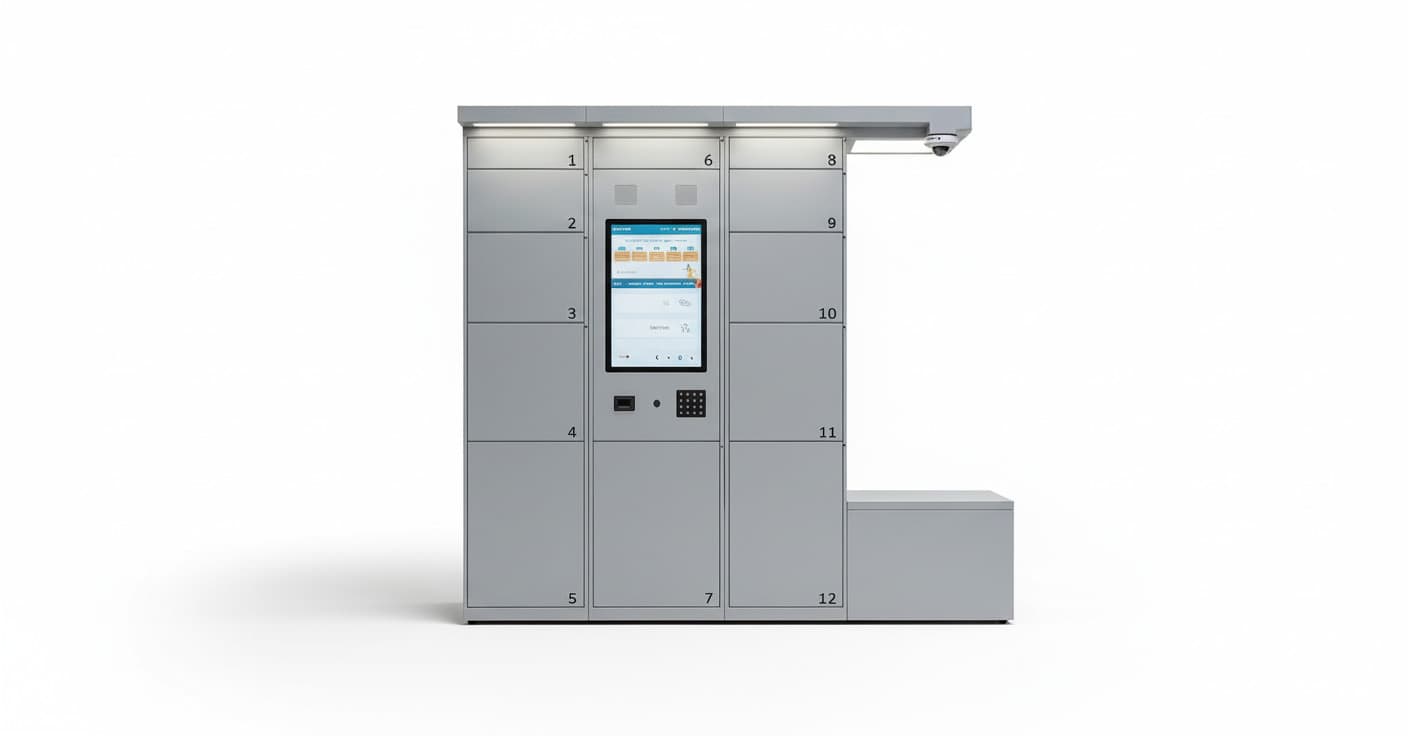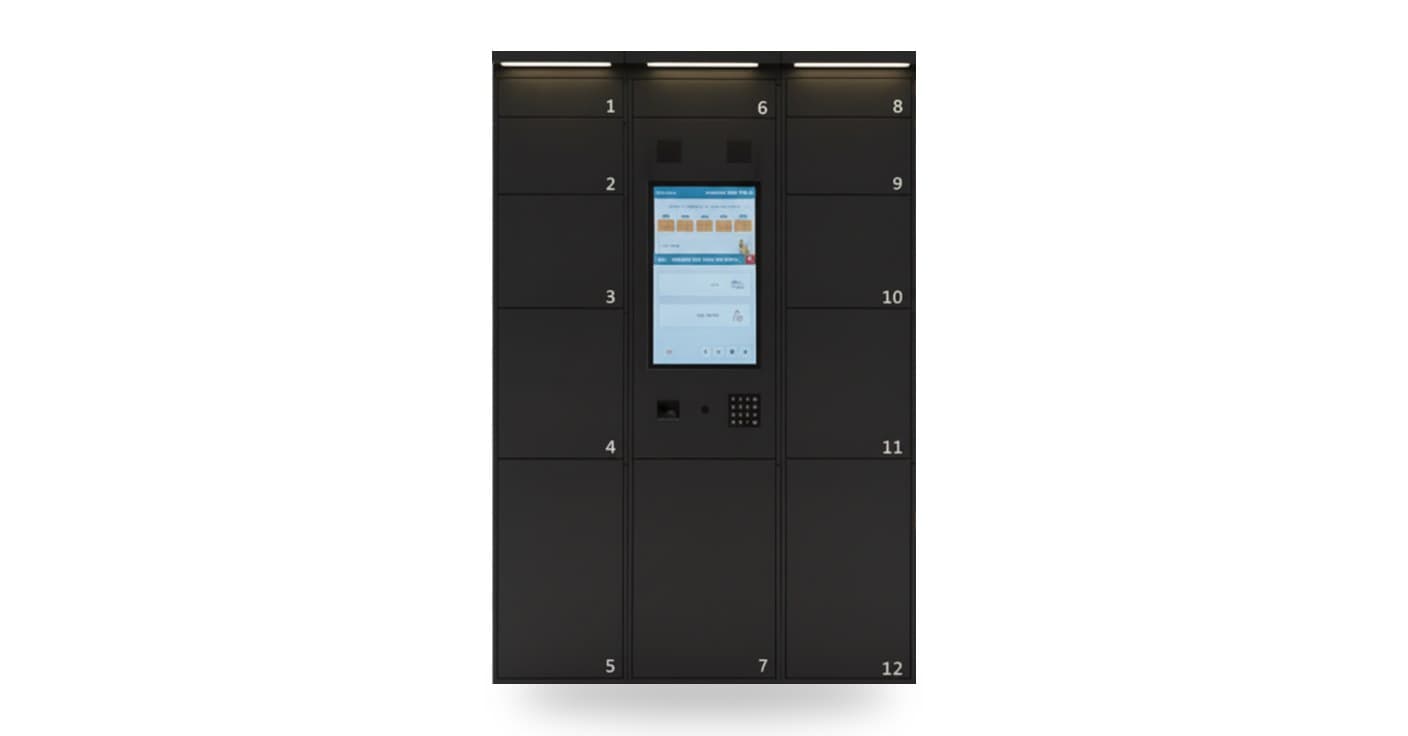
A classic office locker bank is built on an assumption that no longer holds: that every employee has a fixed spot, and comes in every day. In an organization where part of the workforce is in the office three days a week, half the lockers sit empty at any given moment.
Smart lockers change the equation by no longer tying a compartment to a person, without adding a single compartment.
Dynamic allocation: same space, more people
With dynamic allocation, a compartment is granted on arrival and released on departure. The employee identifies, the system gives them a free compartment, and it stays theirs until the end of the day.
The practical meaning is that compartment count derives from peak simultaneous occupancy rather than total headcount. In a hybrid organization, the gap between those two numbers is usually tens of percent.
When a longer-lived compartment is needed, for someone leaving equipment between days, a fixed allocation can be defined for specific users within the same bank.
What it removes from operations
A traditional locker bank drags along quiet work nobody budgets for: managing keys, replacing a cylinder when one is lost, manually opening for someone who locked their bag inside, and clearing out lockers of people who left.
All of that disappears when there is no physical key. A departing employee loses permission, a compartment left occupied shows up in a report, and an exceptional opening is done remotely and recorded.
- There is no physical key, so nothing to lose and no cylinder to replace.
- A compartment held past its limit surfaces in a report.
- Permissions come from HR, so a departing employee loses access the same day.
- A utilisation report shows whether the bank is oversized or undersized.
Not only offices
The same pattern repeats anywhere people arrive for a period and leave personal belongings: gyms, hospitals and clinics, campuses and educational institutions.
Hospitals add another consideration, which is shifts. A compartment allocated for a shift and released at its end serves the same bank three times a day, and that is a configuration decision rather than another purchase.
In gyms, a personal locker bank usually sits alongside towel dispensing. These are two different needs meeting in the same corridor.
Frequently asked questions
Does an employee get the same compartment every day?
Under dynamic allocation, not necessarily, since the compartment comes from a free pool. A fixed allocation can be defined for users who need one, within the same bank.
How many compartments does a hybrid organization need?
The calculation is based on simultaneous occupancy on the busiest day, not total headcount. Utilisation reports let you recalibrate after a few weeks of real use.
What if an employee forgets to clear their compartment?
The system defines a maximum holding time, sends a reminder, and shows the manager which compartments remain occupied, for a controlled, recorded opening.