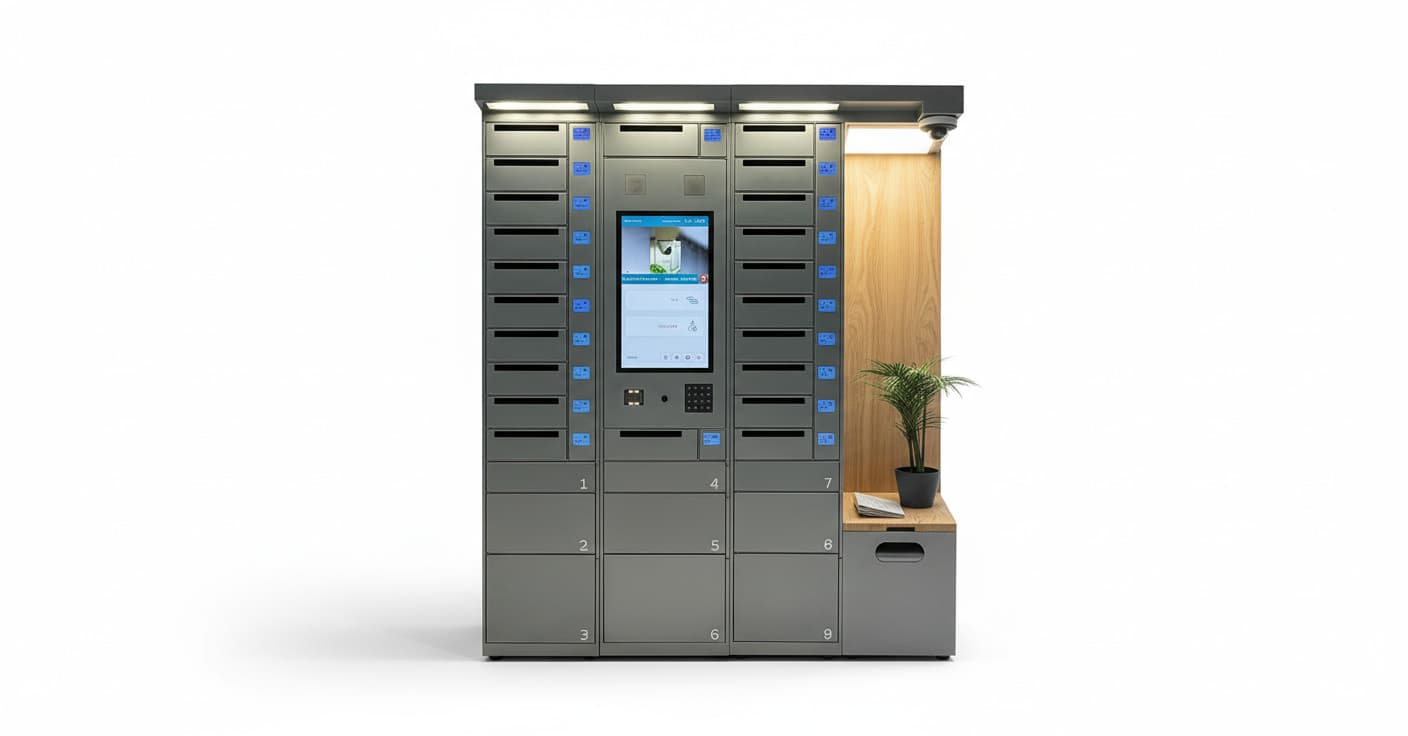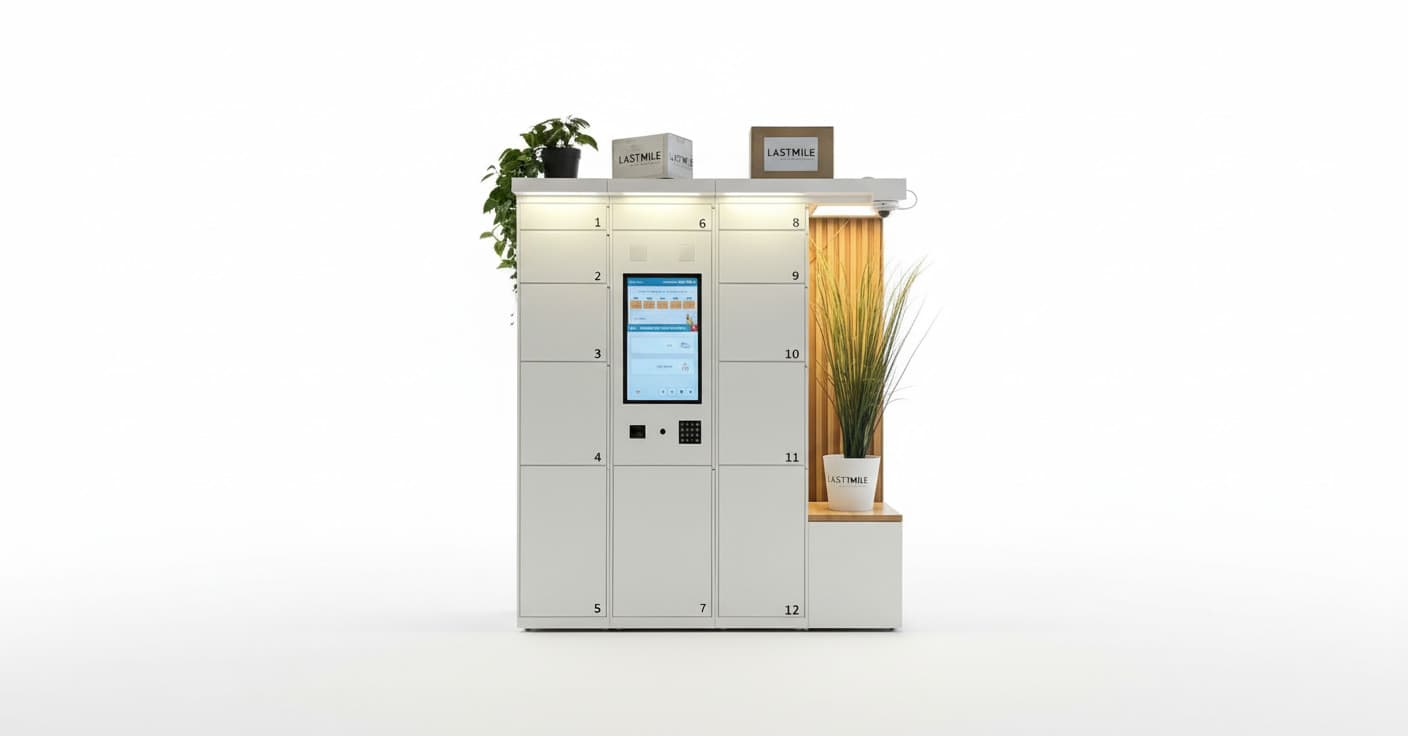
The decision to install a parcel locker in a building almost always follows the same picture: a pile of parcels in the lobby, next to the mail slot, that nobody is responsible for.
This guide walks through the decisions a house committee or management company has to make (how many compartments, where, and under what operating model) before asking for a quote.
How many compartments you actually need
The first instinct is one compartment per apartment. That is an expensive mistake: compartments are not assigned to residents but act as a shared pool, and a parcel typically sits in one for less than a day.
A practical rule of thumb is one compartment per three to five units, depending on the building. A building with a young population ordering heavily online sits at the dense end of that range; an older building at the sparse end.
More important than the count is the size mix: most deliveries are small, but two or three large compartments are enough to absorb the outliers that would otherwise end up on the floor.
- Up to 20 units: a 12-compartment bank is usually enough.
- 20 to 60 units: 20 to 30 compartments, two or three of them large.
- Over 60 units, or several entrances: a 40 to 52 compartment bank, or two separate units.
Where to put it
Placement determines whether the system gets used or becomes furniture. Three conditions must hold together: the courier must reach it without passing a locked door, the resident must walk past it anyway on the way home, and there must be power and connectivity.
The lobby is usually the answer. An underground car park works well in buildings where most residents enter through it, provided there is cellular reception or a network connection.
Check the door width and the route in beforehand, because a 52-compartment unit does not always fit through a standard entrance door.
The operating model: who owns what
The question everyone forgets until something breaks. Three points worth settling in writing with the supplier: who responds to a fault and how fast, who opens a compartment when a resident can't, and who is liable if a parcel goes missing.
A system with a proper management back end solves most of this on its own: the management company sees compartment status and opens remotely, without calling a technician. What remains to agree is the response time for hardware faults.
If the building is replacing its mailboxes anyway, consider a combined solution that handles both letters and parcels. See smart mailboxes and the guide on Standard 816.
Cost, and who pays
The locker is common property, so the expense is split between residents according to the building's bylaws and the general meeting's decision. In new projects the developer folds it into the design stage, and the cost disappears into the handover spec.
Beyond the purchase there are two recurring items worth pricing up front: cellular connectivity for the unit, and an annual service plan. Both are small relative to the investment, but there is no reason for them to surprise the committee in year two.
Frequently asked questions
How many compartments does a 40-apartment building need?
Typically 20 to 30 compartments, two or three of them large. Compartments act as a shared pool rather than being assigned per apartment, so there is no need for one per unit.
Can every courier company use the locker?
Yes. The courier enters the apartment number or scans the shipment at the terminal; no dedicated app or prior agreement with the supplier is required.
What happens when the compartments fill up?
The system flags high occupancy and sends reminders to residents who haven't collected. Occupancy reports show over time whether the bank needs expanding.
Can the locker handle returns too?
Yes. The resident deposits the return in a compartment and gets a code for the courier, who collects it on the next round. It is one of the uses that most increases the system's value in residents' eyes.