A policy separating pupils from phones is an educational decision. What makes it practical or impossible is logistics: where exactly do four hundred devices go at eight in the morning, and how do they come back at two without a queue.
This guide is about the practical side: the configuration, the placement and the procedures that decide whether the solution holds up or gets abandoned after a fortnight.
Per classroom, or centralised
Two approaches, each with a price. A small unit in every classroom spreads the load completely. There is no queue, deposit happens in the first minute of the lesson, and the teacher can see who complied. The downside is the number of units.
A central station at the entrance or in the staff room saves on units but creates a bottleneck at arrival and dismissal. It works better when only some pupils, or only certain hours, require deposit.
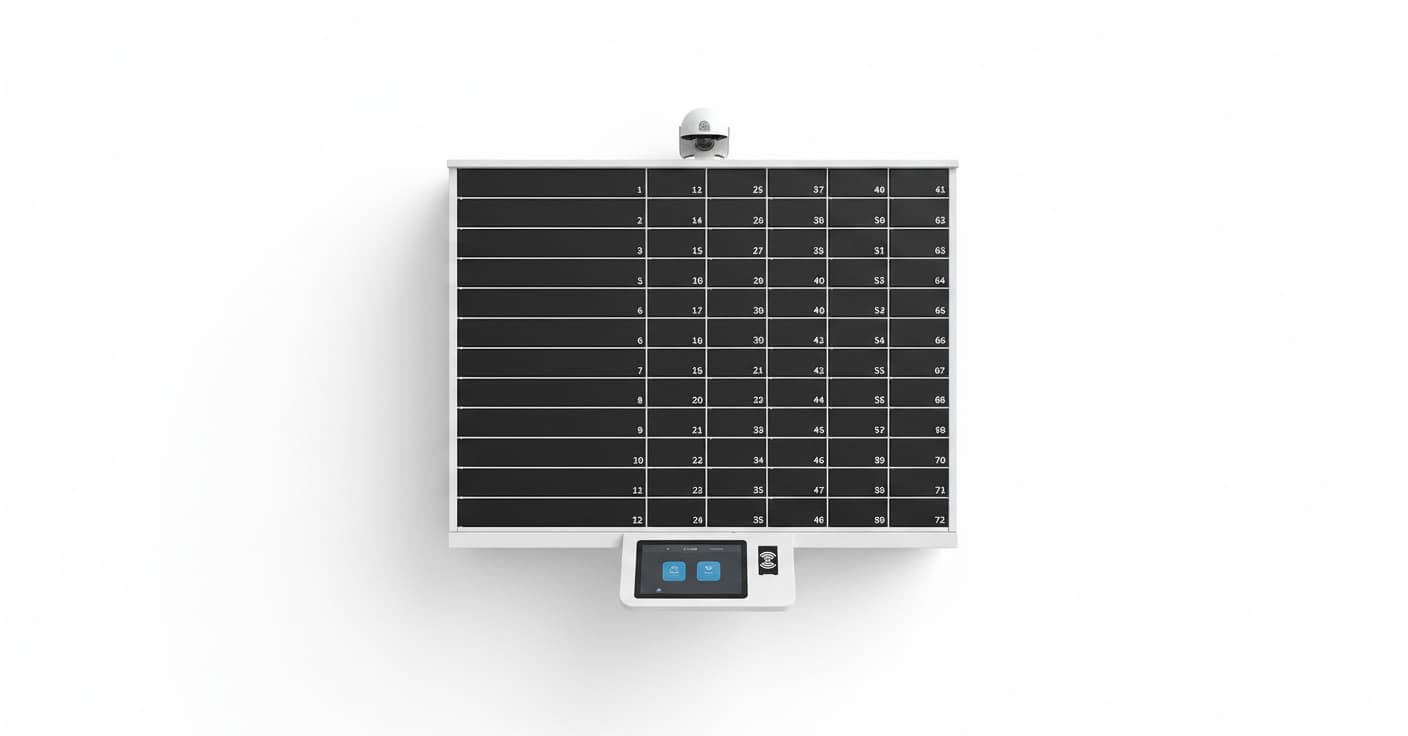
In practice, most schools that succeed with this choose per-classroom distribution. That is also what makes the wall-mounted configuration relevant, since it doesn't eat classroom floor space.
How many compartments, and what size
With per-classroom distribution the count is simple: one compartment per pupil, so a unit of roughly thirty to forty. The compartments are small, phone-sized and no more.
With a central station the rule differs: compartments are larger, because laptops and tablets get deposited alongside phones, and because a pupil sometimes deposits more than one item.
Check up front whether the school also needs in-compartment charging. It creates real value in secondary schools, but adds electrical and maintenance requirements.
Who is liable if a device is damaged
The question that will come up at the first parents' meeting, which is why it should have a written answer in advance. Two elements shrink it almost to nothing.
The first is that the compartment is physically locked and inaccessible to anyone but the depositor, not another pupil and not a teacher. The second is that every opening is recorded, so if something happened you can tell when the compartment was opened and by whom.
What remains is school procedure: what happens when a pupil forgets to collect, and who may open a compartment at the end of the day. Settle that before installation, not after.
Identifying when the pupil no longer holds a phone
The point that most often sinks solutions that looked fine on paper: if identification runs through an app, and the device is locked inside the compartment, the pupil can't open it.
So in an educational setting, identification has to be independent of the device: a personal code on a keypad, a student card, or teacher-initiated opening from the central screen. A personal code with a teacher override works best.
Frequently asked questions
How many compartments does a classroom need?
One per pupil, so a unit of roughly thirty to forty for a standard classroom. A central station is calculated differently, based on how many deposit at once rather than total enrolment.
Can a pupil open their compartment mid-day?
That is a policy setting. You can allow free opening, opening only during defined hours, or opening that requires teacher approval. All of it from the management system.
Do the compartments include charging?
It is an available configuration, not the default. Worth considering in secondary schools, where devices sit for long hours; usually unnecessary in primary schools.
What about a device left in a compartment?
The system shows staff which compartments remain occupied at the end of the day and allows a controlled, recorded opening, so the device reaches lost property instead of staying locked until morning.