Lobby mailboxes haven't changed in fifty years. What has changed is what arrives in them: fewer letters, far more parcels, and couriers who show up when nobody is home.
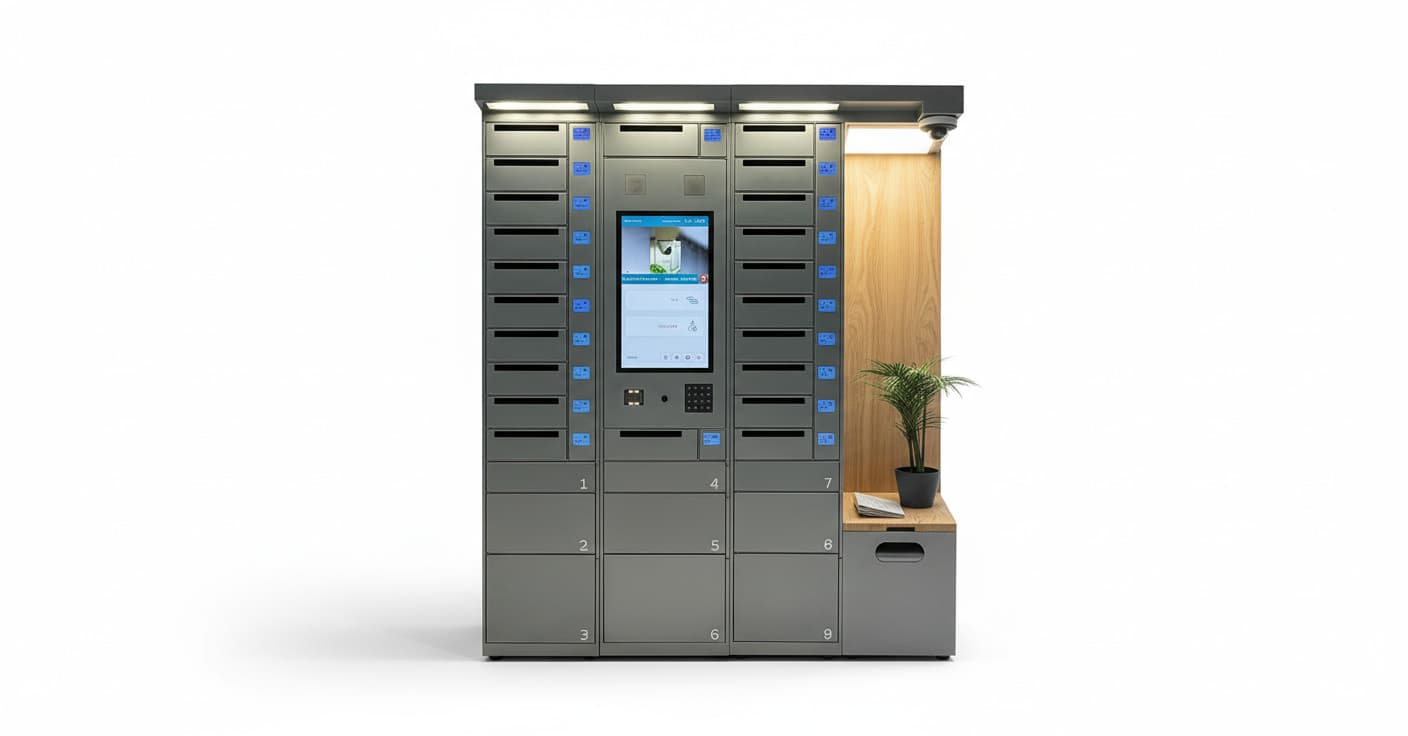
A smart mailbox is the attempt to solve that without changing the habit. It sits in the same spot in the lobby, but it can take a parcel, know who it belongs to, and tell them.
What's actually different
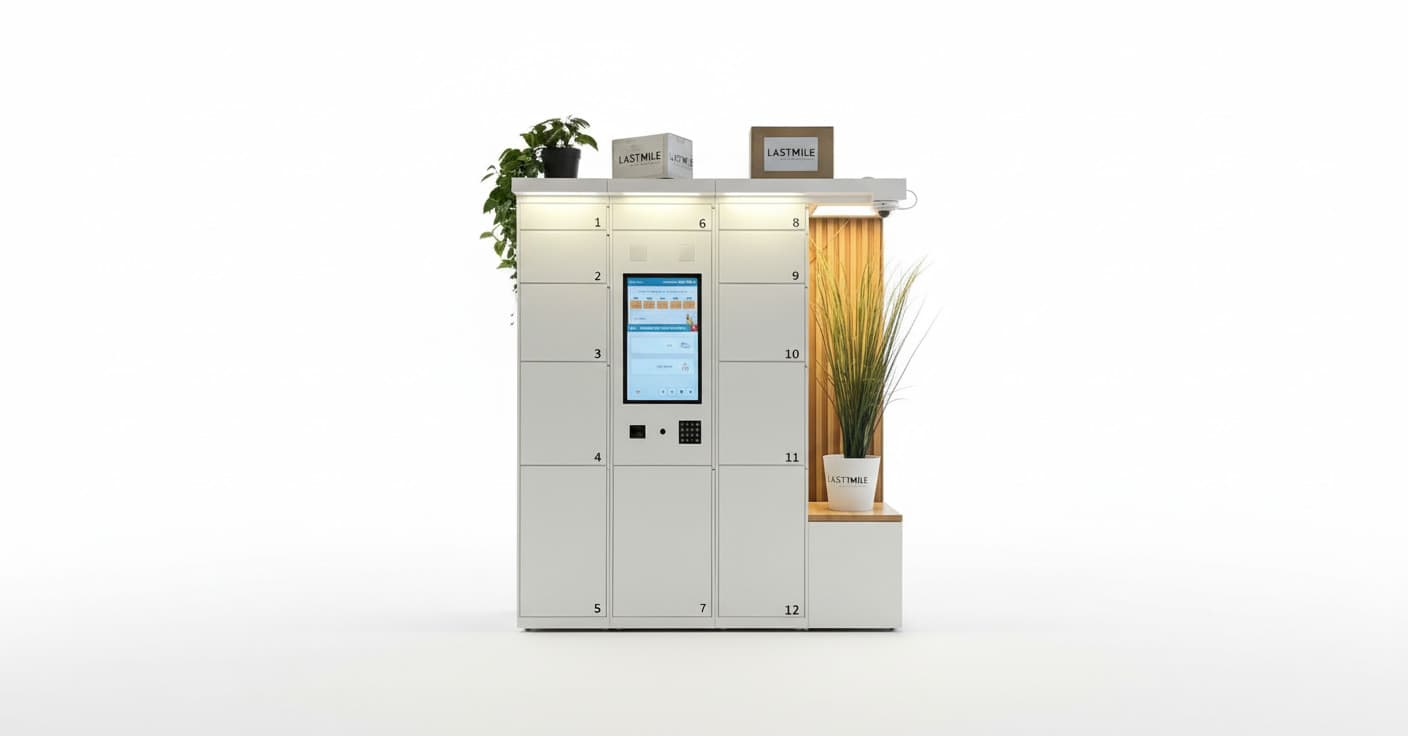
A conventional bank of boxes is a metal cabinet with locks. A smart bank is the same cabinet plus three things: compartments in several sizes so a parcel fits, a screen where the courier picks the apartment, and a system that knows which resident owns which compartment.
The practical difference is that the bank stops being a place where mail piles up and becomes a delivery point that records who deposited what, when, and for whom.
A day in the life of a delivery
The courier reaches the lobby, picks the apartment number on the screen, and the system opens a free compartment in the right size. They put the parcel in and close the door. At that moment the resident gets an SMS: you have a delivery, here's the code.
The resident comes home whenever it suits them, enters the code or opens it from the app, and the compartment unlocks. No coordination, no opening hours, and no parcel sitting on the floor by the lift.
The same mechanism works in reverse: a return to a store is deposited in a compartment, and the courier collects it on the next round.
What the committee and management company get
Beyond resident convenience, the system gives the management company a layer that didn't exist before: who holds which compartment, what is occupied right now, and which parcels have been sitting too long.
In practice it removes the annoying part of the job: chasing residents who moved out without returning a key, manually opening a compartment when someone lost theirs, and managing the parcel pile in the lobby.
- Assign a compartment to a new resident without changing a lock.
- Remote opening when needed, with a record of who opened it and when.
- An alert on a parcel nobody collected.
- An occupancy report telling you whether the bank needs expanding.
When it pays off, and when it doesn't
The system justifies itself where there is real delivery volume: a building with dozens of units, an office tower, a campus, or a residential complex with several entrances. That's where the saving in time and friction is obvious.
In a small building with few residents and few deliveries, a conventional bank built to Standard 816 still does the job. The right question isn't "what does the box cost" but "how many deliveries arrive at this building each week".
If most of the volume is parcels rather than letters, it's worth looking at dedicated smart parcel lockers too. They target exactly that, without the letter module.
Frequently asked questions
What if the resident never collects the parcel?
The system sends automatic reminders after a preset interval and shows the management company which compartments have been occupied too long. The compartment can be opened remotely when needed, with a full record.
Do you need an app to open a compartment?
No. The code sent by SMS is enough to open it. The app adds convenience (delivery history, one-tap opening and notifications), but it isn't a condition of use.
What happens during a power cut?
Compartments stay locked and secure, and the system resumes when power returns. A mechanical emergency override allows controlled access during the outage.
Can registered mail be delivered to a smart mailbox?
Yes. Depositing into a compartment is recorded and identified, which replaces the need for the resident's physical signature at handover, subject to the carrier's procedures.