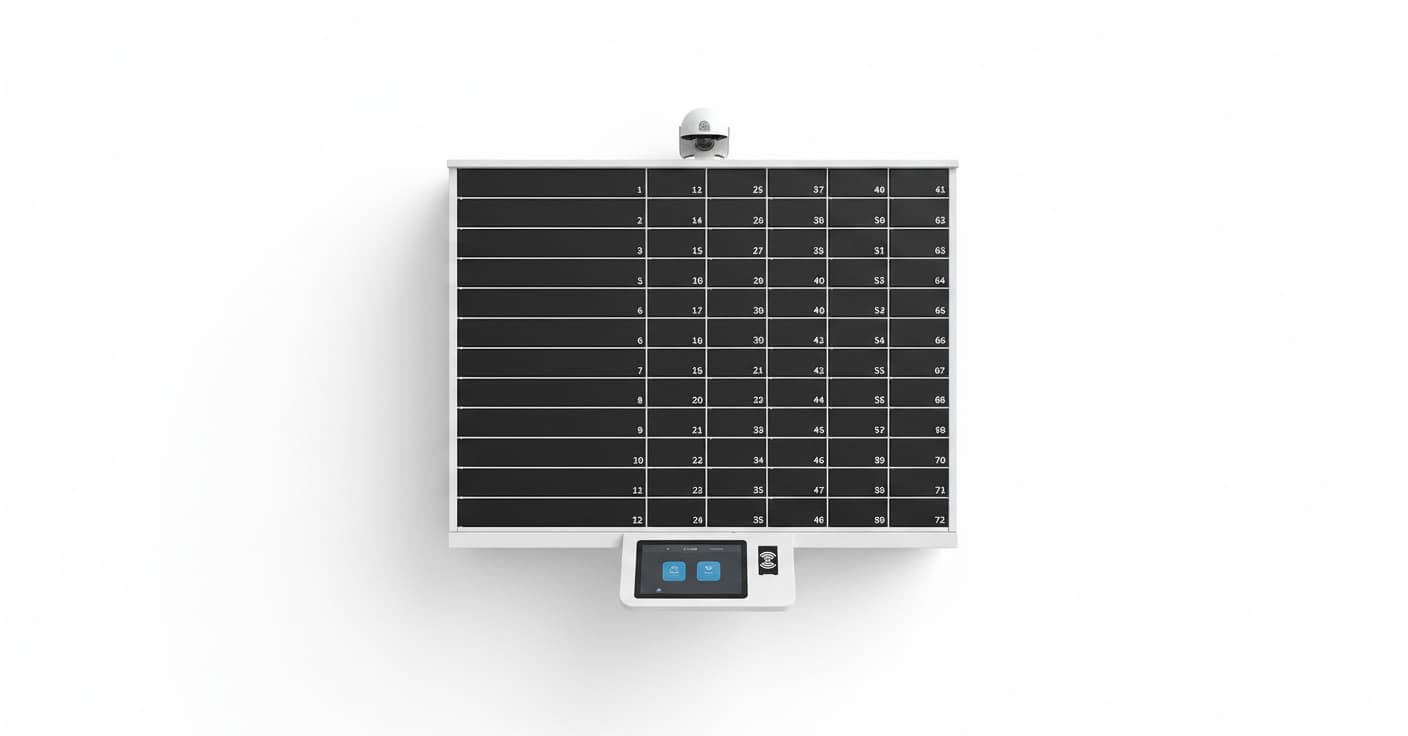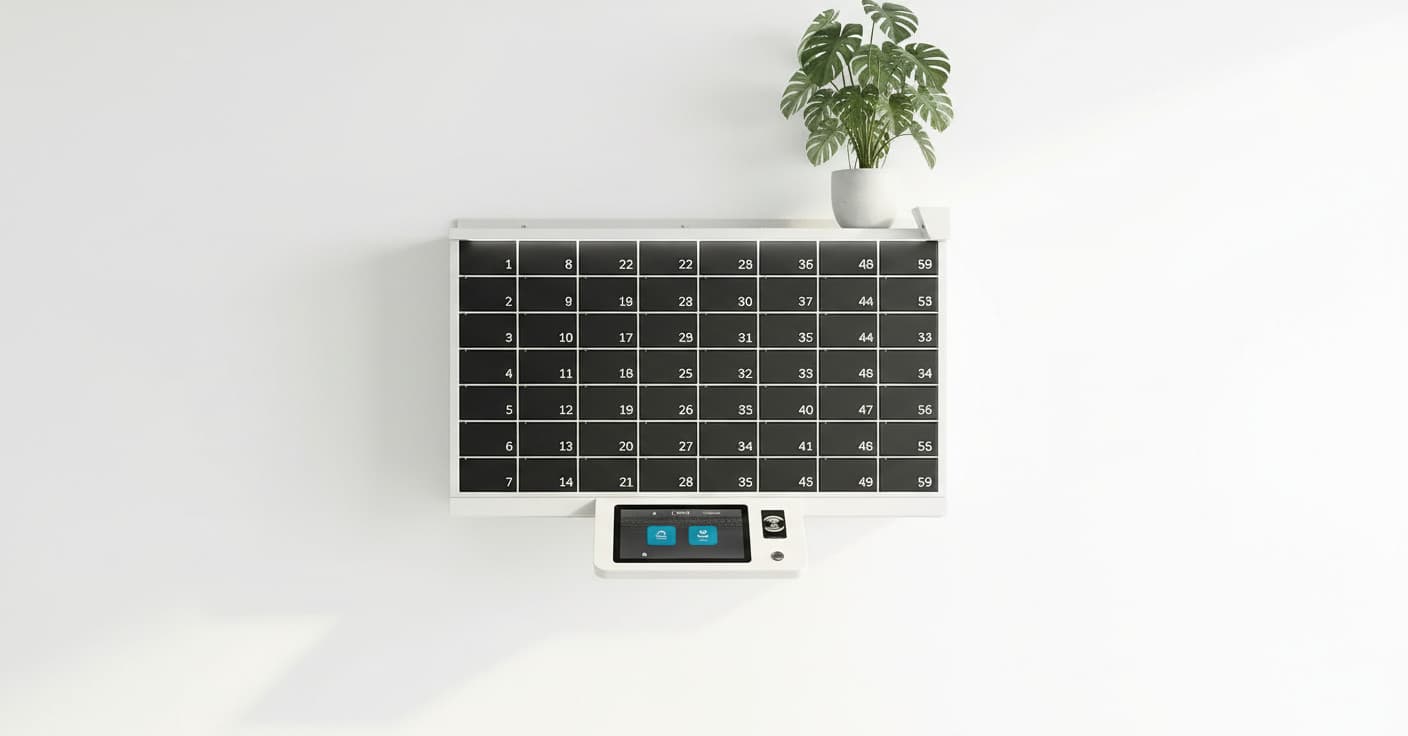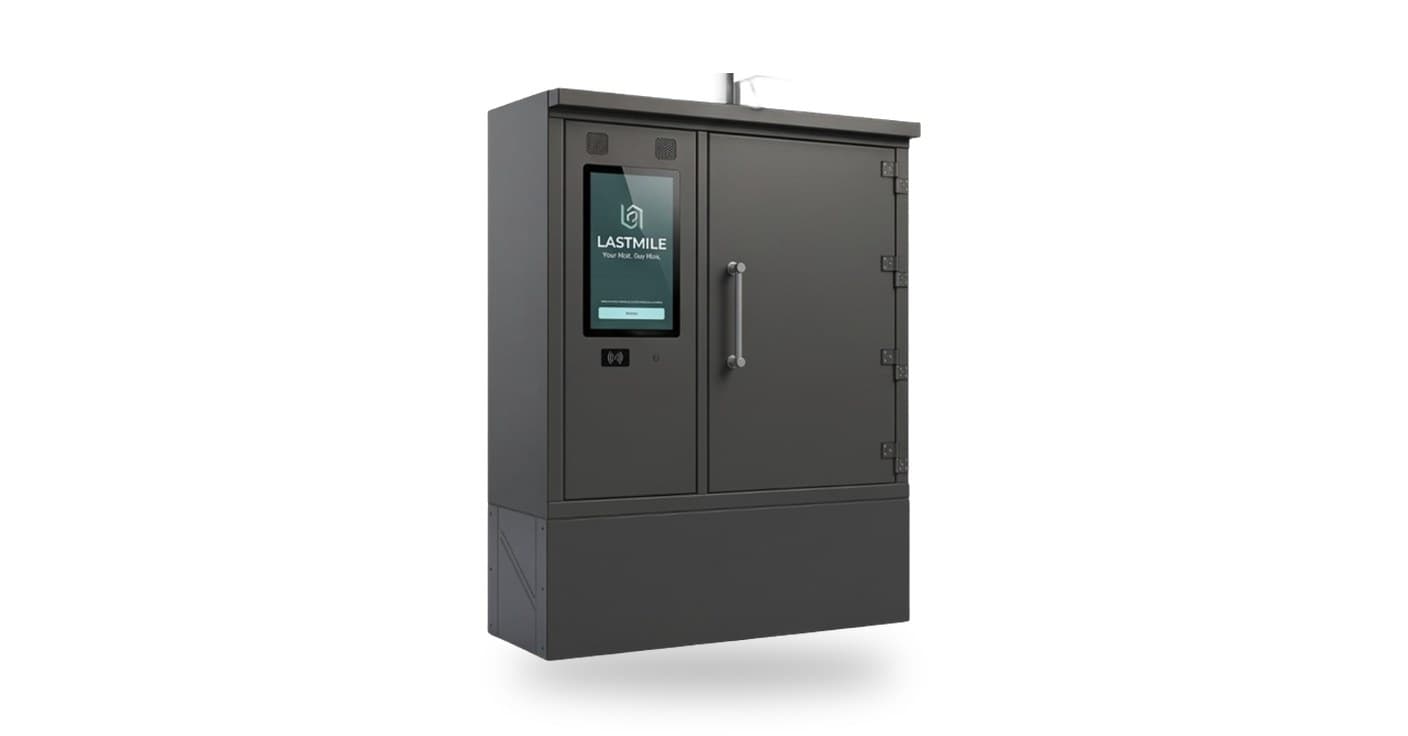
A shared safe solves one problem: it keeps out anyone without the code. It doesn't solve the second, usually more important one: whoever has the code can see, and touch, everything inside.
In the context of weapons and sensitive assets that distinction isn't theoretical. It is the difference between an organization that knows who held a given item at a given hour, and one that guesses.
A personal compartment, not a shared space
The core principle of a smart safe is that each depositor has their own compartment, and only that one opens when they identify. A depositor neither sees nor touches what others deposited.
That removes the question of trust between colleagues, and removes the need for an intermediary managing deposits and withdrawals. The safe itself is the clerk.
In physical terms, a smart safe is built to the same standard as a conventional one. What differs is the identification and recording layer on top of it.
What the audit trail must include
A useful audit trail answers a question after the fact without interrogating anyone. Every incident produces three: who, what, and when.
In practice, that means every compartment opening is recorded with the user's identity, a timestamp, and the type of action, deposit or withdrawal. And if an authorized emergency opening exists, it is recorded at the same level of detail.
- Identification is personal: a card, a code or a biometric, never a shared code.
- Every opening carries a timestamp, emergency openings included.
- An item not returned by a defined hour raises an overdue alert.
- The log can be exported for an investigation without granting system access.
Where it sits, and what else belongs there
The natural location is the transition point: a facility entrance, the boundary between a classified and an open area, or a security room. That is where deposit happens anyway, as part of the movement.
Since it is the same point where phones are deposited and keys are drawn, it is worth planning all three together. The gain is one log for the transition point instead of three separate ones.
Frequently asked questions
Does each depositor get a fixed compartment?
You can define a fixed compartment per depositor, or allocate dynamically from a pool on each deposit. A fixed compartment is more convenient; dynamic allocation uses capacity better when depositors outnumber compartments.
Who can open a compartment in an emergency?
Only a person defined in advance as authorized, and the action is written to the log exactly like any other opening, including their identity and a timestamp.
Does it work on an air-gapped network?
Yes. The station runs locally and keeps its log, which can be exported without any connection to an external server. That is a common requirement in defence facilities.